how to know what size your finger is
Considerations for Taking Accurate Measurements of a Finger or Ring
Considerations for Taking Accurate Measurements of a Finger or Ring
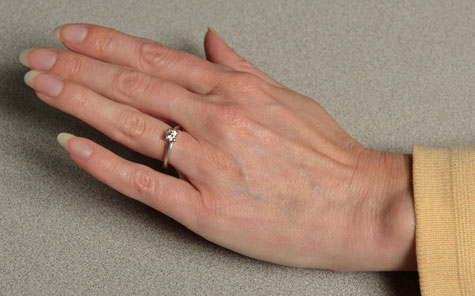
When placed on a finger, the band must pass the finger articulation
Ring remains upright and does non turn freely
Ring does not come off hands
Sizing a ring requires an accurate measurement of the customer'southward finger or ring
Tools to Determine Finger or Band-Size Measurements
Tools that are used for accurately measuring finger or band size
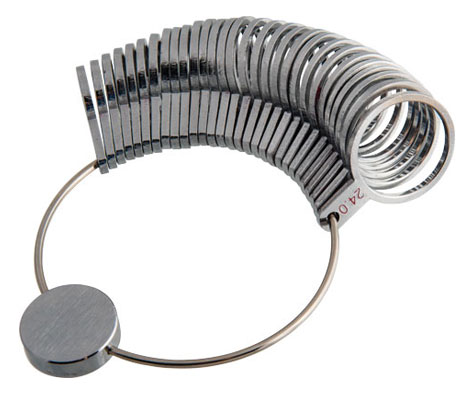
Finger-sizing gauges are used to determine finger size. They are marked in whole and one-half sizes. The narrow-finger sizing guess measures fingers for narrow rings such every bit solitaire rings or narrow bands (up to 4 mm in width).
Finger-sizing gauges are too available with convex inner surfaces
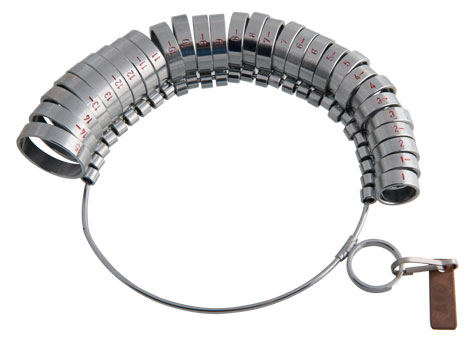
Wide-finger sizing gauges are used to decide finger size for broad rings such as fashion rings and wide bands (over 4 mm in width)
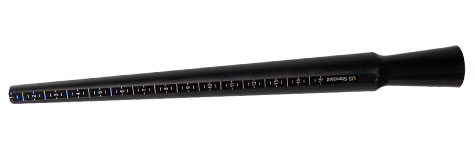
The size of a client's band is determined using a ring sizing stick or band mandrel made of tapered wood, plastic, or aluminum that is marked in quarter, half, and total-size increments (These increments equate to within diameter increases of approximately 0.two mm, 0.iv mm and 0.8 mm respectively).
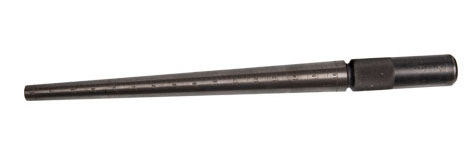
To practise sizing piece of work, bench jewelers use a steel ring mandrel made of tapered, milled steel; and marked in quarter, half, and whole sizes (0.2 mm, 0.4 mm and 0.8 mm, inside diameter respectively).
All finger-sizing gauges, ring sticks, and ring mandrels must exist calibrated to 1 some other so measured sizes are consequent throughout a retail store, a merchandise shop, or a manufacturing company
Calibration of tools is important for operations with multiple locations, such as a retail store that sends work to a trade shop, or manufacturing companies that do special orders or custom work for retailers
Potential Problems and Engineering Features
Avoiding problems by using the right tools and techniques to measure band and finger size.
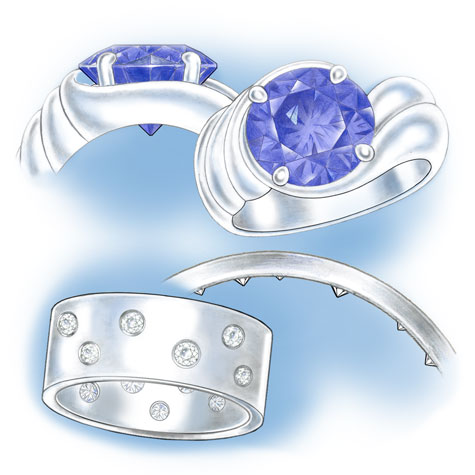

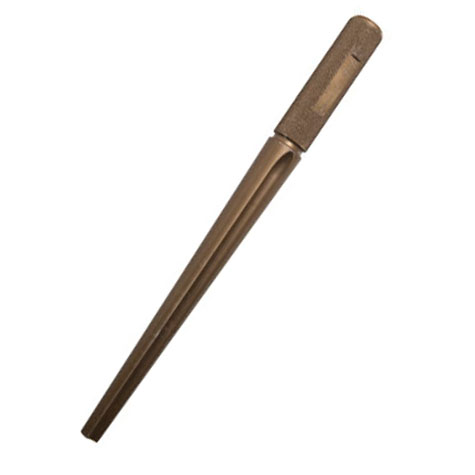
Always check if a mounted gemstone's culet protrudes into the finger hole. If it does, a ring-sizing stick or mandrel with a groove must exist used to forestall impairment to the stone.
Sizing or treatment a ring with an exposed culet is not advisable. This is considered a design flaw and a jeweler cannot safely and accurately size the ring without adventure of impairment. In this state of affairs, consider an alteration, a change of setting, or a remount.
Measuring Finger Size
Techniques to Mensurate Finger Size
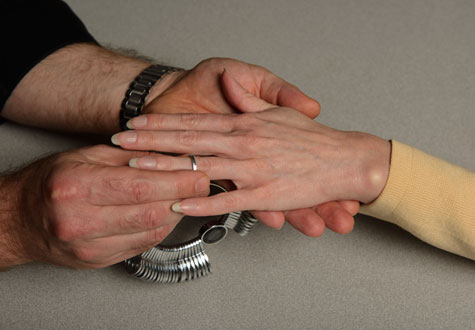
To size a ring for a customer, measure the finger using a ring-sizing estimate with a width that most closely matches the finger
The correct size should be just loose plenty to laissez passer over the finger joint and settle at the position on the finger where the band will exist worn
Gently slide the finger-sizing gauge onto the customer's finger. Never force it over the joint.
Every hand is unique. Gauge each plumbing fixtures on a example-past-instance basis to determine what ring size is most comfortable for the customer.
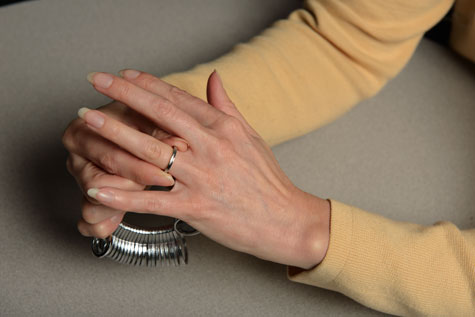
Allow the customer to put the finger-sizing gauge on and accept it off
Considering fingers bully and contract, a finger size should be taken on three different occasions to confirm the measurement
Alternate between sizes in the consequence that the customer wants the finished ring to fit snugly or loosely
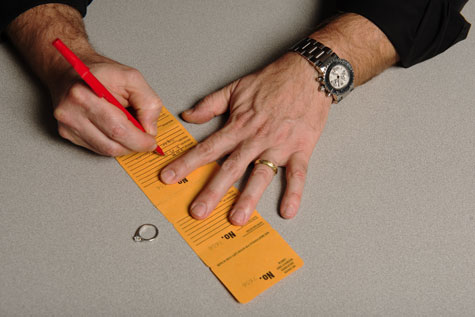
Record the size on the job envelope, forth with whatsoever special instructions, such as requests to preserve special engraving
Be sure to signal the finger for which the ring is being sized
Best Practices for Determining Authentic Band Sizes
Techniques and Tools to Measure Ring Sizes
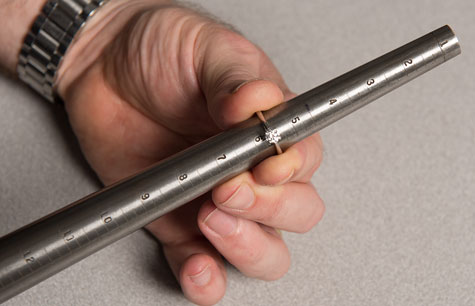
Sometimes, a customer wants to bank check the size of a ring that fits comfortably. To accept these measurements, apply a ring stick or mandrel.
For accuracy, be sure the new ring is the same shape or configuration as the sample ring. Determine if the band being measured is round. If the shape is distorted, gently round it with a rawhide or nylon hammer on a steel-ring mandrel before determining size.
Slide the band gently onto the ring stick until it is snug, simply practise not force it as the measurement could be inaccurate
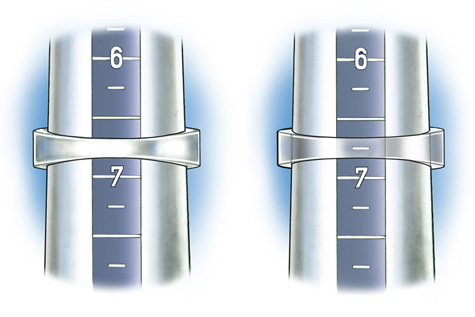

This client'southward ring is a size 6.75 (17.1 mm inside diameter).
Standard Rings of Even Width
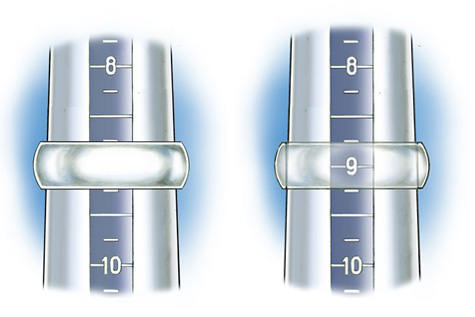
To measure a finger for a solitaire or ring of even width (one to four mm), use the narrow finger-sizing gauges

On the ring stick, read the ring size at the line on the stick where it touches the central point of the width. This case is a size 9.0 (19.0 mm inside diameter).
Tapered Rings
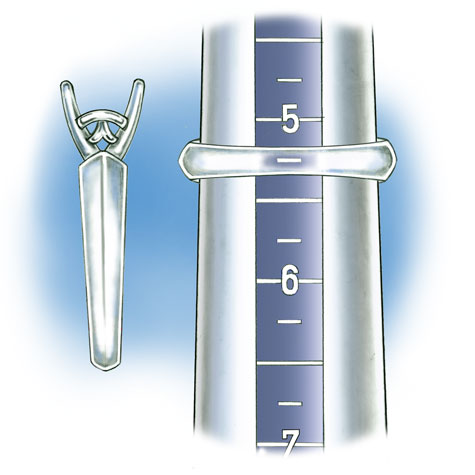
Use narrow gauges to measure tapered rings from v to 7 mm at the widest surface area to a narrower width of 2 to 3 mm

Determine the size at the line where the central point of the narrowest part of the ring touches the ring stick. The narrowest part of the ring might exist the top or the lesser of the shank. This band is size v.25 (15.9 mm within diameter).
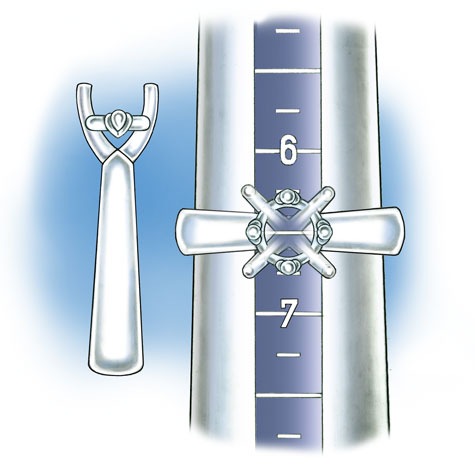

Determine the size at the line where the fundamental point of the narrowest part of the band touches the ring stick. The narrowest part of the ring might be the elevation or the bottom of the shank. This band is size half dozen.fifty (16.9 mm inside diameter).
Wide Rings and Bands
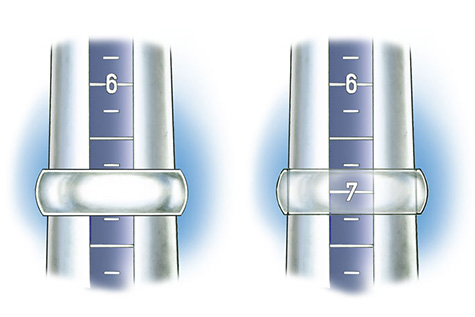
To mensurate a band wider than iv mm, use the wide-finger sizing gauges. Do not forcefulness the finger-sizing judge over the joint.
Broad rings accept more metal that contacts the skin, and fit more tightly on the mitt

On a ring stick, the size is adamant at the line on the mandrel that touches the central bespeak of the ring's width. In this example, the band is a size 7 (17.iii mm inside diameter).
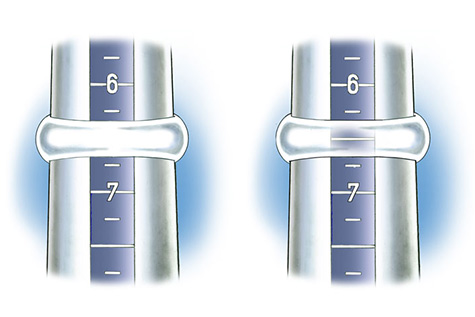
Wide rings might need to be one-half to i total size (approximately 0.iv mm to 0.eight mm US finger size inside diameter) larger than narrow rings, depending on the finger articulation size and the client's comfort.

Even if a customer feels they know their ring size, ever check it. This tapered band is a size half dozen.75 (17.1 mm inside diameter).
Bridal Sets
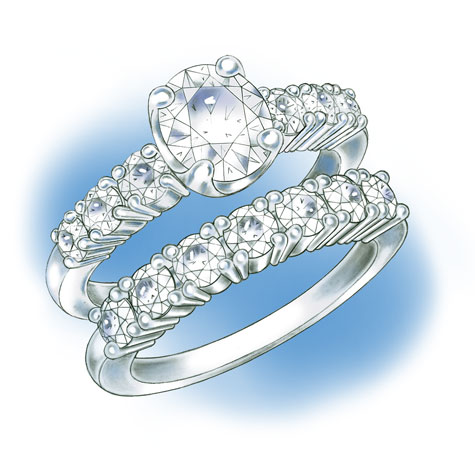
Bridal sets wider than 4 or five mm when the band and engagement band are worn together require special consideration
To forbid loss or damage earlier the rings are joined together, the engagement ring might have to be adapted while being worn alone
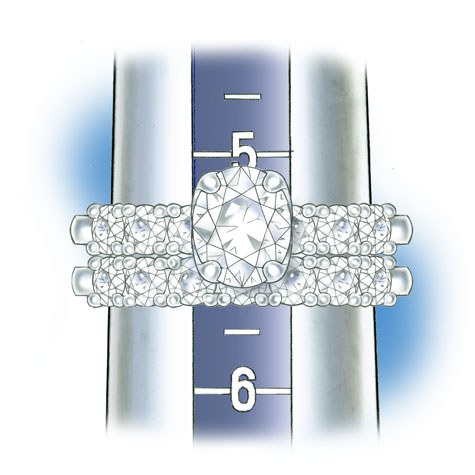
Measure the bride-to-be's finger using a wide-finger sizing guess. However, rings worn individually might be loose, specially when her easily are cold.
When the rings are soldered together, they can be resized every bit a unit of measurement. All the same, this means in that location is potential for an additional sizing joint on the engagement ring.
Convex Interior – Rings or Bands
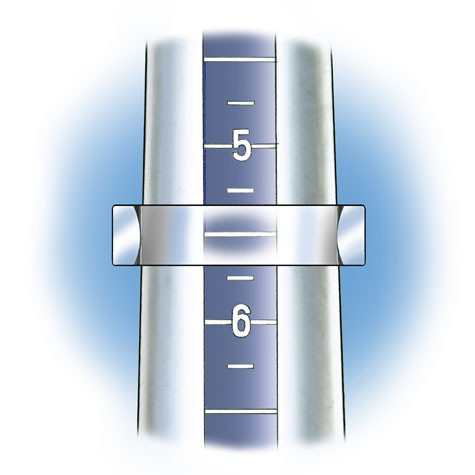
Convex interiors of rings or bands are askew inward from the edges of the shank

To fit a ring with a convex inside shank, utilize the narrow-finger sizing judge
Determine the size at the point where the center of the ring or band touches the sizing stick. Then measure i-quarter size smaller.
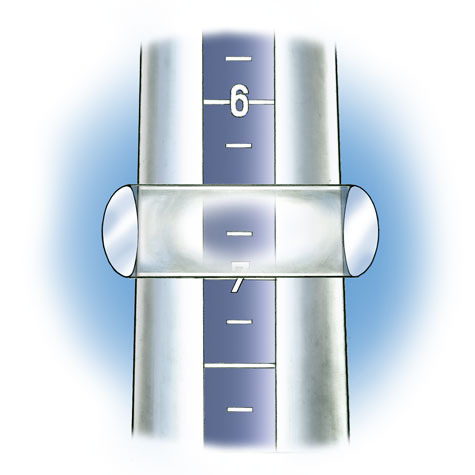

Size the ring one-quarter size smaller than the measured finger size. For example, if the size 7 (17.3 mm inside diameter) gauge fits, size the ring to a 6.75 (17.1 mm inside diameter).
In these examples, the flat-superlative band is a size 5.v (16.1 mm inside diameter) and the half-round band is a 6.75 (17.1 mm inside diameter).
Rings with Open Space Above the Finger
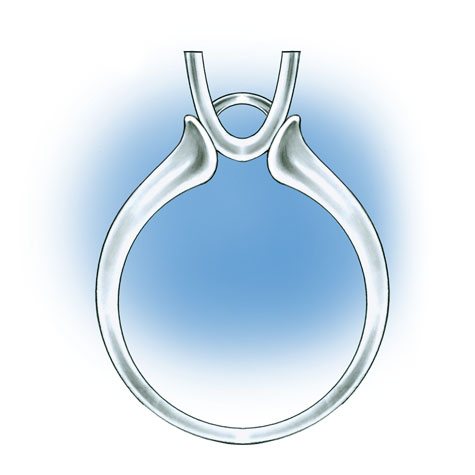
These rings have less metal in contact with the finger. Because they fit the paw more loosely, they will need to exist sized smaller. The size adjustment depends on the altitude between the ends of the shank and the opening.

To fit a ring with infinite between the top of the finger and the mounting, use the appropriate finger-sizing guess (narrow for shanks less than four mm wide and wide for those greater than four mm wide). If the opening is 3 mm to 5 mm, subtract at least a quarter-size from the measured ring size.
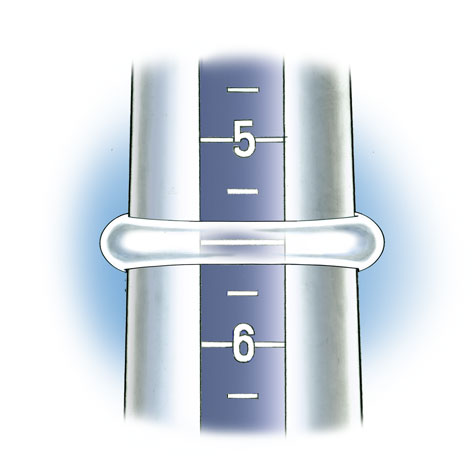

Determine the size at the point where the eye of the narrowest part of the ring touches the ring stick. Then adjust the size according to the width of the opening at the peak of the shank. With the opening at the top, this ring volition fit a size 5.75 (16.3 mm inside bore), not a 5.v (16.1 mm inside bore).
Special Circumstances
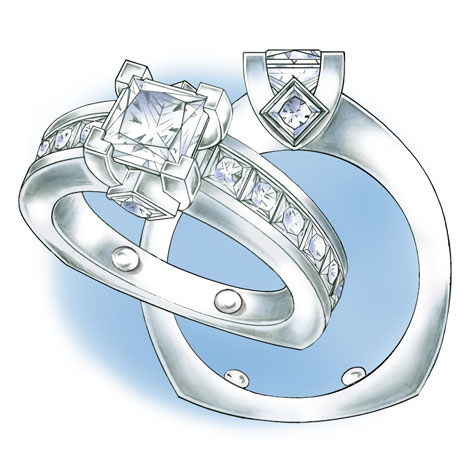
Every manus is unique. When measuring fingers and fitting rings, at that place may be special situations. Approximate these on a instance-by-example basis to determine what is most comfortable for the client. Options exist for rings that cannot exist sized or that are worn temporarily.

Although sizing chaplet can be a potential solution for keeping a band from turning on the finger, they do non always satisfy customers. They take up about a half- size of space and tend to be uncomfortable to wear.
Soldering two minor beads onto the inside of a ring shank is the simplest way to keep a ring from turning when the finger is 1.five (1.2 mm United states of america finger size within bore) or more sizes larger than the area where the ring sits.
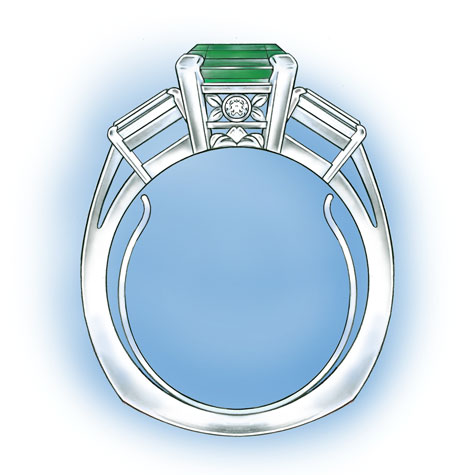

Installing a spring insert is an fantabulous way to keep a ring sitting direct on a finger. The bound, made of highly tensioned platinum, resembles a horseshoe and will concord the ring snugly. It is flexible and comfortable to habiliment, making it superior to sizing beads.
To maintain the tension or springiness of the insert, use a light amplification by stimulated emission of radiation welder to install it. Using a torch will anneal the spring.
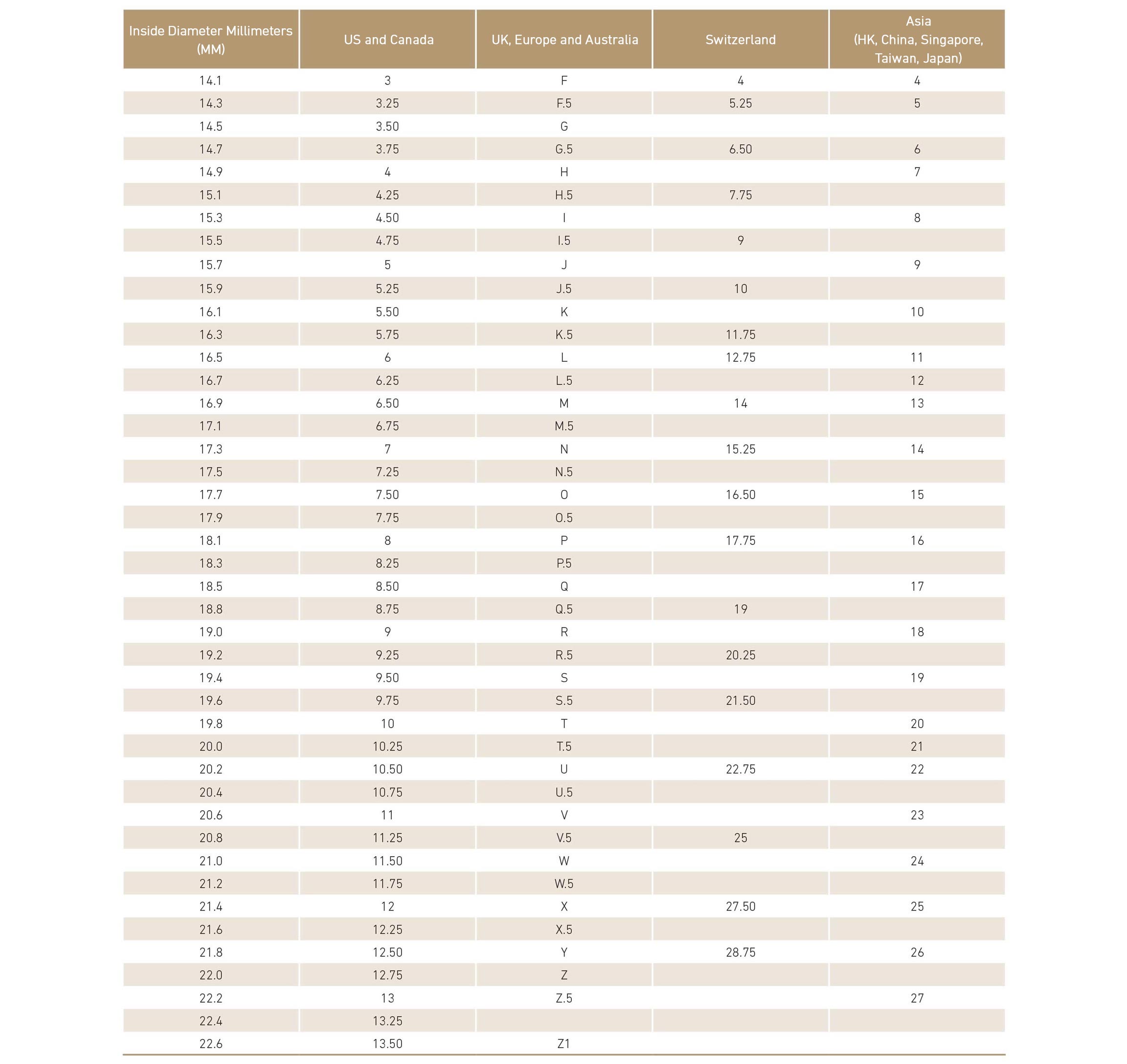
International Band Size Chart
Another style to measure a band is to take a measurement of the inside and determine the finger size from a standard nautical chart. The within of the ring must be perfectly circular for this to work.
 Back To Top
thorntonhisgused1988.blogspot.com
Source: https://www.gia.edu/quality-assurance-benchmark/accurate-determination-finger-ring-size
0 Response to "how to know what size your finger is"
Post a Comment